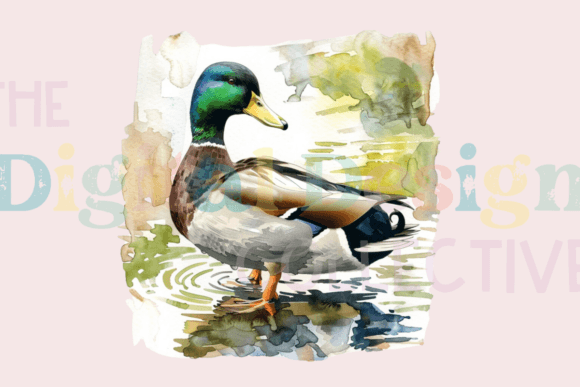
Watercolor Mallard Duck Clipart: A Versatile Design Asset
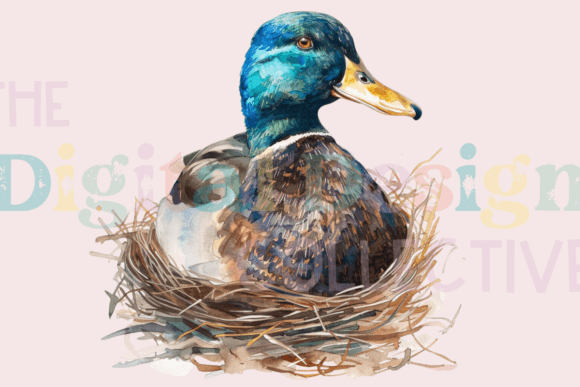
There is something quietly captivating about a mallard duck rendered in watercolor. The soft blending of greens, blues, and chestnut browns, the subtle wash of pigment across the feathers, the gentle feathering at the edges—it carries a natural charm that vector illustrations often struggle to replicate. Watercolor Mallard Duck Clipart PNG has become a favorite among designers, small business owners, and content creators who want to bring warmth and authenticity to their projects without commissioning original artwork. But like any design asset, its real value depends on how and where you use it.
What Makes Watercolor Mallard Duck Clipart Stand Out
Watercolor art has a personality that feels both intentional and organic. A well-executed mallard duck in this medium captures the bird's iridescent green head, the white ring around its neck, and the subtle gradients of its plumage in a way that feels alive. The PNG format adds practical advantages: transparent backgrounds, ready-to-use layers, and no messy cutting out. You can drop the clipart into a layout, adjust size, rotate, or layer it without losing quality or fighting with white boxes.
The visual style leans toward the artistic and approachable. It is not hyper-realistic, nor is it cartoonish. Instead, it sits comfortably in the middle—detailed enough to be recognizable as a mallard, loose enough to feel like art. This makes it a strong choice for projects that need personality without looking overly polished or corporate.
- Washes and blending give the feathers depth and movement.
- Soft edges help the duck sit naturally on different backgrounds.
- Transparent PNG format means instant usability in design software like Canva, Photoshop, or InDesign.
When you compare it to flat vector clipart, the watercolor version brings an emotional quality. It feels handcrafted, which can be a powerful differentiator in a market saturated with generic stock graphics.
Branding and Logo Design
For a brand that wants to communicate warmth, nature, or authenticity—think farm-to-table restaurants, outdoor gear companies, wildlife conservation groups, or children's product lines—this clipart can serve as a logo element or a supporting graphic. A mallard duck in watercolor conveys approachability and a connection to the natural world. However, it is important to treat it as a creative font or design asset rather than a finished logo. You may need to pair it with a clean serif font or a handwritten script to build a complete brand identity. The clipart works well when scaled to a moderate size but can lose detail if shrunk too small, so plan your logo layouts with that in mind.
Packaging and Product Design
Packaging for honey, tea, organic snacks, or eco-friendly products often benefits from natural imagery. A watercolor mallard duck can be printed on labels, boxes, or tissue paper to create a cohesive look. Because watercolor has a hand-painted feel, it pairs naturally with kraft paper, recycled cardboard, or matte finishes. The PNG format makes it easy to place the duck on product mockups during the design phase, saving time and reducing the need for custom illustration costs.
Social Media and Digital Content
Bloggers, content creators, and social media managers frequently need visual elements that feel authentic and engaging. A mallard duck clipart in watercolor can be used in Instagram posts about nature, outdoor adventures, or seasonal content. It also works well in YouTube thumbnails, Facebook banners, and Pinterest pins where a handcrafted aesthetic aligns with the channel's voice. Because the clipart is a PNG with a transparent background, you can overlay it on photographs, gradient backgrounds, or textured surfaces without awkward edges.
Print Publications and Editorial Design
Magazines, brochures, and newsletters about wildlife, conservation, farming, or rural living often include illustrated elements. Watercolor Mallard Duck Clipart PNG can be used as a chapter opener, a sidebar accent, or a decorative break between sections. In editorial design, it adds visual interest without competing with body copy. Pairing it with a clean sans serif font for headings and a readable serif for body text keeps the layout professional while allowing the clipart to shine.
How the Right Design Asset Influences Visual Hierarchy and Engagement
Every design decision affects how the audience perceives your message. A watercolor mallard duck is not just decoration—it shapes visual hierarchy, brand perception, and audience response. When placed strategically, the clipart draws the eye to a specific area of the layout, signaling importance. For example, placing the duck near a headline or a call-to-action button can guide the viewer's attention naturally.
The organic style also influences brand perception. Watercolor implies patience, artistry, and a human touch. This can elevate a brand's perceived value, especially when competing against businesses that rely heavily on template-driven graphics. The clipart's handcrafted look reinforces authenticity, which matters to audiences who are skeptical of overly polished marketing.
Consistency matters too. Using the same clipart across multiple touchpoints—website, packaging, social media, print—creates a recognizable visual thread. Over time, customers begin to associate the mallard duck with your brand, which builds recognition and trust. This is similar to how a distinctive typeface or a consistent color palette becomes part of a brand identity.
Evaluate Project Fit Before You Commit
Not every project calls for a watercolor style. If your brand is minimalist, modern, or tech-focused, a watercolor mallard duck may feel out of place. But if your project involves nature, handcrafted goods, children, or outdoor themes, it is likely a strong fit. Ask yourself: does the clipart reinforce the story I am telling? If the answer is yes, move forward.
Test Font Pairings and Layouts
Watercolor clipart pairs best with fonts that complement its organic feel. A handwritten script font can echo the hand-painted quality. A classic serif font like Garamond or Playfair Display can add elegance. A clean sans serif like Lato or Montserrat can provide contrast and keep the layout grounded. Avoid pairing it with overly rigid or decorative display fonts that compete for attention. The goal is balance: the clipart and typography should work together, not fight each other.
Review Resolution and Licensing
Before purchasing or downloading Watercolor Mallard Duck Clipart PNG, check the resolution. For print projects, you need at least 300 DPI at the size you intend to use. For web use, 72 DPI is typically sufficient, but check that the file is large enough to avoid pixelation. Commercial licensing is another critical factor. If you are using the clipart in products for sale—like t-shirts, mugs, or stationery—confirm that the license covers commercial use. Some clipart sets restrict the number of copies or require attribution. Read the terms carefully to avoid legal issues later.
Consider Readability and Scale
Watercolor clipart has inherent softness, which is part of its charm. But that softness can become a liability if the image is too small. On a business card, the subtle washes of color may become muddy or indistinct. On a poster, the same clipart can be a focal point. Test the clipart at different sizes in your layout software before finalizing. If the detail holds up at your intended size, you are good to go. If not, consider using it only in larger formats.
Build a Cohesive Visual System
One clipart image alone can feel like an accent. To create a stronger design system, look for additional watercolor elements that share a similar style—leaves, reeds, water ripples, or other birds. Grouping related clipart pieces together can create a richer scene and a more immersive brand experience. Many designers treat watercolor clipart sets as a flexible toolkit rather than a one-off asset, which allows for greater creative range across different projects.
A Final Perspective on Design Assets
Watercolor Mallard Duck Clipart PNG is more than a cute graphic. It is a design asset that carries emotional weight, visual texture, and branding potential. Whether you are designing a logo for a nature-inspired business, creating packaging for an artisanal product, or adding personality to a social media feed, this clipart can elevate your work when used thoughtfully. The key is to match the style to the message, test your pairings, and always consider how the asset will be perceived by your audience. Good design is not about using every tool available—it is about choosing the right one for the story you want to tell.