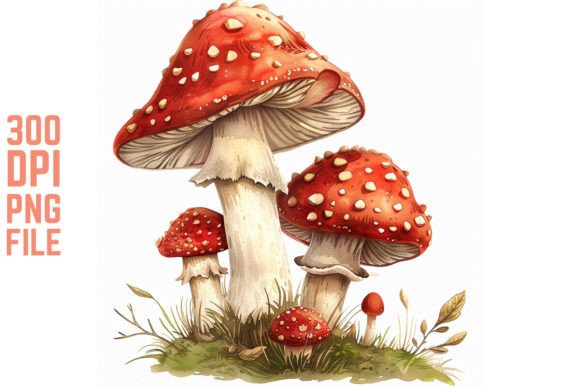
Watercolor Mushrooms Clipart: A Designer's Guide
Walk into any craft fair, browse through an indie brand’s packaging, or scroll through nature-themed social media feeds, and you will likely notice a recurring aesthetic: soft, painterly mushrooms rendered in watercolor. Watercolor mushrooms clipart has become a go-to design asset for creatives who want to bring an organic, whimsical, yet refined feel to their projects. Unlike rigid vector icons or overly detailed photographs, these hand-painted illustrations strike a balance between artistry and usability. They look like they belong in a children’s book or a botanical journal, yet they feel modern enough for sophisticated branding and editorial work.
The visual personality of watercolor mushrooms clipart is what makes it so versatile. The textures are soft, with subtle gradients and irregular edges that mimic real watercolor washes. Colors range from earthy ochres and forest greens to vibrant amanita reds and deep violet blues. Because each mushroom is painted individually, no two strokes look identical—even within the same set. This organic imperfection brings warmth and humanity to digital and print designs alike. Whether you are a seasoned designer, a small business owner launching a nature-inspired product line, or a hobbyist scrapbooking your latest forest hike, this clipart style gives your work an authentic handcrafted feel without requiring you to pick up a brush.
Where Watercolor Mushrooms Clipart Shines in Creative Projects
The applications for watercolor mushrooms clipart are surprisingly broad. For branding and logo design, these illustrations work beautifully for tea companies, herbal shops, organic skincare lines, botanical studios, and children’s products. The soft edges and natural color palette communicate gentleness, earthiness, and trust—qualities that resonate with eco-conscious consumers. A logo built around a single watercolor mushroom can feel both rustic and premium, especially when paired with a clean serif font or a subtle handwritten script.
In packaging design, the clipart adds a tactile, almost edible quality. Think about a mushroom-shaped soap box, a herbal tea tin, or a jar of wild-foraged jam. Watercolor mushrooms clipart placed on labels or hang tags immediately signals handcrafted care. It also works well on greeting cards, wedding invitations, and stationery sets for botanical-themed events. For web design and social media graphics, these clipart elements can serve as hero images, background textures, or accent illustrations that break up blocks of text without overwhelming the layout. Bloggers and publishers use them to illustrate articles on foraging, mycology, forest ecology, or even cozy seasonal recipes.
Because the style is painterly but not hyper-realistic, watercolor mushrooms clipart adapts well across both digital and print media. A high-resolution PNG file with transparent background lets you place a mushroom on a website header, an Instagram post, or a product mockup with zero fuss. On printed materials like flyers, posters, and book covers, the watercolor effect retains its charm when printed at reasonable sizes, provided the original file has sufficient DPI (300 or higher is ideal for professional print work).
How Watercolor Mushrooms Clipart Influences Readability, Brand Perception, and Audience Engagement
One underrated advantage of using watercolor mushrooms clipart is how it affects visual hierarchy and readability. Because watercolor textures are naturally soft and low-contrast, they don’t compete aggressively with type. When you place a watercolor mushroom behind or beside text, it creates a gentle backdrop that draws the eye without shouting. This makes it easier for readers to focus on your message—whether that is a product description, a blog headline, or a call-to-action on a landing page. Unlike a bold line illustration or a high-contrast photo, a watercolor element invites scanning and lingering, which can improve engagement metrics like time on page or dwell time on packaging.
Brand perception also benefits from the artistry of this clipart style. Audiences associate watercolor with creativity, patience, and human touch. When a brand uses watercolor mushrooms clipart consistently across its identity, it signals that the business values craftsmanship over mass production. This is especially powerful for entrepreneurs and small business owners who compete against larger, more generic competitors. A mushroom logo rendered in watercolor feels personal; it suggests that someone spent time creating something beautiful, which in turn builds trust and emotional connection.
From a recognition standpoint, a distinct watercolor style can become a signature. If every social media post, product label, and email header features the same set of hand-painted mushrooms, your audience will start associating those shapes and colors with your brand. Over time, this visual consistency strengthens brand recall. For content creators and publishers, using watercolor mushrooms clipart as a recurring visual motif can help tie together an entire blog series or a seasonal campaign, making the content feel cohesive and professionally curated.
Practical Guidance for Choosing and Using Watercolor Mushrooms Clipart
When evaluating a watercolor mushrooms clipart set, start by examining the file formats and resolution. The most usable sets include high-resolution PNG files with transparent backgrounds, plus editable source files like PSD or AI if you plan to tweak colors or scale dramatically. Check whether the set offers multiple mushroom varieties—such as amanita, chanterelle, oyster, and morel—so you have flexibility in your compositions. Some sets also include complementary elements like leaves, moss, acorns, or frames, which can save you time when building out a full design system.
Consider how the clipart will pair with typography. Watercolor mushrooms clipart typically looks best alongside clean, neutral typefaces that do not compete with the painterly texture. A simple sans serif font like a geometric sans or a humanist sans works well for modern, minimal layouts. If you want a more natural or vintage feel, try a slab serif or a serif font with moderate stroke contrast. For headers or accent text, a handwritten script font that mirrors the organic flow of the watercolor can create a cohesive artisanal look—but be careful not to overdo it, as two handcrafted styles together can sometimes feel busy. A good rule of thumb: keep typography simple and let the clipart carry the decorative weight.
Readability considerations go beyond font choice. Make sure there is enough contrast between the mushroom illustration and any text overlays. A dark red mushroom cap on a dark green background may look beautiful, but if you place white text over it, the words will be hard to read. Use the clipart as a background element behind light text with a subtle overlay, or position the text in empty space (like a clean white corner) while the mushroom occupies the visual focal point. When the clipart is used as a large hero image, you can apply a semi-transparent gradient or a soft drop shadow to maintain legibility.
Licensing and Project Fit: What to Look For
Not all watercolor mushrooms clipart sets come with the same usage rights. If you are a designer or entrepreneur creating products for sale—such as stickers, T-shirts, mugs, or printable wall art—you need a commercial license that explicitly allows merchandise use. Many marketplaces offer standard commercial licenses that cover up to a certain number of units sold, while extended licenses handle unlimited print runs and larger distribution. Always read the terms before purchasing. For bloggers and content creators creating digital content like social media graphics, blog images, and e-books, most standard licenses cover those uses, but double-check if the set restricts use in digital products that are resold (like templates or digital downloads).
Licensing aside, think about how the clipart fits the overall tone of your project. Watercolor mushrooms clipart works beautifully for earthy, organic, and nature-inspired brands, but it may feel out of place for a sleek tech company or a luxury fashion line. That said, some designers have successfully used watercut mushrooms in unexpected ways—for example, as a playful element in a children’s app interface or as a whimsical accent in a wedding website for a forest-themed ceremony. The key is intentionality: if you choose this style, let it inform your entire visual language, from color palette to typography to photography style.
Testing is easy. Before committing to a large project, download a small sample (many clipart sellers offer one or two free elements) and mock up a quick layout. See how the colors hold up on screen and in a test print. Observe whether the watercolor edges remain crisp enough at your intended usage size. If you plan to scale the mushroom up significantly (for example, turning a small clipart mushroom into a full-page background), ensure the original resolution is high enough to avoid pixelation. A 3000×3000 pixel file gives you plenty of room for most applications.
Final Observations and Recommendations
Watercolor mushrooms clipart is not just a fleeting trend—it is a durable design asset that has earned its place in the toolkits of illustrators, brand strategists, publishers, and crafters. Its painterly charm brings a human touch to projects that need warmth, authenticity, and a connection to the natural world. Whether you are designing a logo for a small apothecary, illustrating a blog post about mycology, or creating product packaging for a farmer’s market brand, this clipart style lets you communicate care and creativity without spending hours behind a real brush.
When you select a set, prioritize resolution, variety, and licensing clarity. Pair it with restrained typography—a neutral sans serif or a subtle serif—to let the watercolor texture breathe. Test your compositions on both screen and paper to ensure readability and color fidelity. And most importantly, use the clipart intentionally as part of a cohesive visual system, not as a one-off decoration. When used well, watercolor mushrooms clipart becomes a signature element that elevates your designs, builds brand recognition, and resonates with audiences looking for something handmade and heartfelt in a digital world.